


Products show


Products Description
Equerry Grooming Brushes
Professional Grooming Solutions for Every Horse Lover
Product Overview
Equerry grooming brushes are designed with superior craftsmanship and equine comfort in mind. Trusted by professional riders, grooms, and horse owners worldwide, these brushes offer reliable performance for daily grooming, competition prep, and therapeutic massage. Combining ergonomic design with high-quality materials, Equerry brushes help maintain a clean, healthy, and happy horse.
Products Customization
|
Model Name |
Type |
Key Features |
Ideal For |
|
Equerry Soft Body Brush |
Soft Bristles |
Natural horsehair, gentle on skin |
Face, legs, sensitive areas |
|
Equerry Dandy Brush |
Medium/Hard Bristles |
Deep cleaning, durable synthetic fiber |
Body, muddy areas |
|
Equerry Rubber Curry Comb |
Massage Tool |
Flexible rubber, circular motion |
Loosening hair, massage |
|
Equerry Hoof Brush |
Firm Bristles |
Small head, strong bristles |
Cleaning hooves |


Company Information

Certificate

Packaging & shipping

FAQ
Q1: Are Equerry brushes suitable for all horse breeds?
A: Yes, Equerry grooming brushes are designed for use on all horse breeds and coat types. Choose softer brushes for sensitive or clipped horses and firmer brushes for thick winter coats or muddy conditions.
Q2: Can these brushes be washed?
A: Absolutely. Most Equerry brushes can be washed with warm water and mild soap. Let them air dry completely before storing.
Q3: Do you offer bulk or wholesale purchasing?
A: Yes, we support bulk orders, including wholesale pricing for stables, clubs, retailers, and distributors. Contact us directly for quotations.
Q4: Are Equerry brushes available in custom colors or private label (OEM)?
A: Certain models may be available for customization, including handle colors and logo printing. Please reach out for OEM/ODM opportunities.
Q5: What's the difference between the soft and dandy brush?
A: The soft brush is made for delicate areas and fine dust removal, while the dandy brush has stiffer bristles ideal for removing mud and heavier dirt from the body.
Contact Us

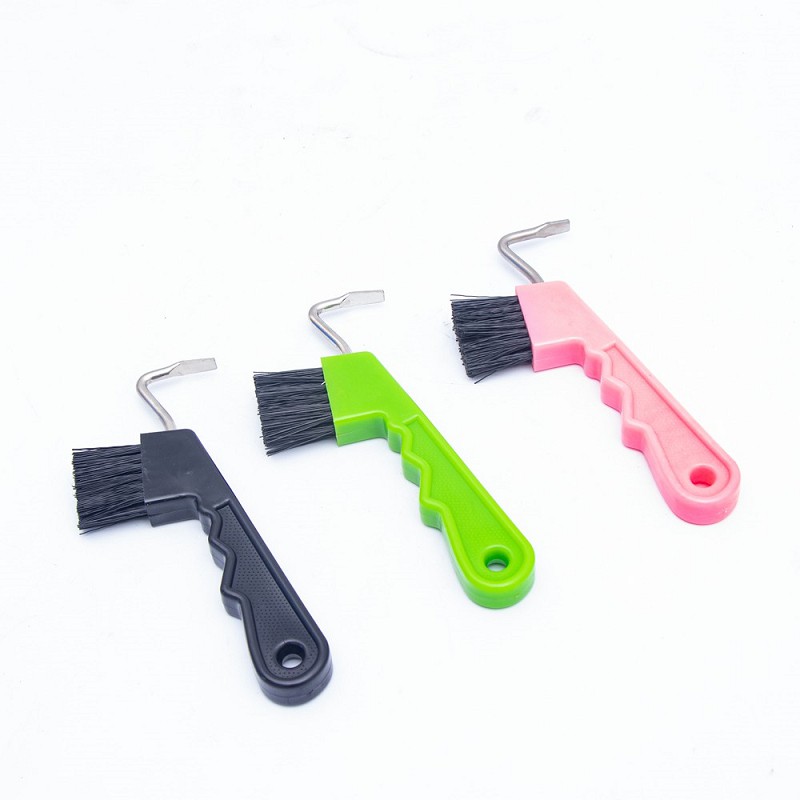
What is Hoof Pick With Brush
The hoof pick with brush has been designed with reinforced steel to create a stronger hook that easily picks packed dirt and mud from hooves. The comfort rubber grip fits perfectly into any size hand and the stylish design makes it easier to grip and use.
Benefits of Hoof Pick With Brush
Cleaning debris
The primary purpose of a hoof pick with brush is to clean out debris, dirt, rocks, mud, manure, and other foreign objects from a horse's hooves. This is important for maintaining the horse's hoof health, comfort, and soundness. Accumulated debris can lead to discomfort, injury, or hoof problems if not removed.
Preventing Infections
Regular use of a hoof pick with brush helps prevent conditions such as thrush and abscesses, which can occur when debris and moisture get trapped in the hooves. Removing this debris allows air to circulate and helps keep the hooves dry and healthy.
Inspecting hooves
Using a hoof pick with brush allows horse owners, farriers, or veterinarians to inspect the hooves for signs of injury, disease, or lameness. It's an opportunity to identify and address any issues early, ensuring the horse's overall health and well-being.
Maintaining balance
The removal of debris can help maintain the natural balance of the hooves, which is crucial for the horse's gait and overall soundness. Detecting and addressing imbalances early can prevent lameness and other issues.
Routine grooming
Hoof picking is a fundamental part of routine grooming and horse care. It helps keep the horse clean and comfortable and can provide an opportunity to bond with the horse.
Hoof pick with brushs come in various shapes and sizes, with different handle designs. Some hoof picks have additional features, such as brushes or scrapers, to assist in cleaning. When using a hoof pick, it's essential to be gentle and patient, as the hooves are sensitive areas, and forcing or jabbing the pick can cause discomfort or injury to the horse.
Regular hoof picking is a crucial part of horse care and should be done at least once a day, more often if the horse is in a particularly muddy or rocky environment. It's an essential practice for maintaining the horse's hoof health and overall well-being.



Quality services
Our team is committed to delivering high-quality services to our clients. We use the latest technologies and tools to ensure that our services exceed your expectations.
Quality
We offer high quality services and products that are relatable and resonate with your business needs.
Experience and expertise
Our company has been in business for many years and has amassed significant expertise and experience to provide quality services to our clients.
Competitive pricing
We offer competitive pricing for our services without compromising on quality.
Certifications and quality standards
Choose a factory that adheres to industry standards and certifications to ensure product safety and quality.
Common Hoof Problems
Poor shoeing or trimming
● Long toes and collapsed heels
Strains flexor tendons and the navicular bone
● Short toes and long heels
Cause trauma to the coffin bone and joint
● Imbalanced hooves
Causes stress on supporting ligaments and joints
Hoof cracks
● Dry weather, or frequent changes from wet to dry
● Drawn-out trimming intervals and long toes
● Poor hoof quality, some horses may be born with it
Treatment tips
● Apply hoof moisturizers to the hoof wall and sole during:
Dry weather
Periods of brittle or cracking hooves
● Provide good nutrition and commercially available hoof supplements to improve hoof quality
● Regularly trim your horse's hooves
Purpose Of A Hoof Pick With Brush
|
Aspect |
Purpose of a Hoof Pick With Brush |
|
Cleaning Debris |
The primary purpose of a hoof pick with brush is to clean dirt, mud, stones, and other debris that may get lodged in the hooves of horses or other hoofed animals. Keeping the hooves free from debris helps prevent discomfort, infections, and hoof-related issues. |
|
Maintaining Hygiene |
Hoof pick with brushs are essential for maintaining hoof hygiene. By removing debris and compacted materials from the hooves, the risk of bacterial or fungal infections is reduced, promoting overall hoof health. |
|
Checking for Issues |
Regular use of a hoof pick with brush allows horse owners and caretakers to inspect the hooves closely. This helps identify any signs of injury, bruises, cracks, or abnormal growth early on, enabling timely intervention and treatment. |
|
Enhancing Performance |
For horses involved in various activities like riding, racing, or competing, clean and well-maintained hooves are crucial for optimal performance. A hoof pick with brush aids in ensuring the hooves are in the best condition possible. |
|
Building Trust |
Cleaning a horse's hooves with a hoof pick with brush is also part of the grooming routine. Consistent grooming helps build trust and a bond between the horse and its handler, making the overall handling experience more pleasant for both. |
|
Preventing Lameness |
Neglecting hoof care can lead to lameness in horses, which can be painful and debilitating. Regular use of a hoof pick with brush, coupled with proper trimming and shoeing, can significantly reduce the risk of lameness and related issues. |
|
Cost-Effective Solution |
A hoof pick with brush is a simple, inexpensive tool that provides significant benefits in terms of hoof health and overall horse well-being. It is a cost-effective solution for maintaining hoof hygiene compared to potential medical expenses for hoof-related problems. |
Step-by-Step Guide to Using a Hoof Pick With Brush
Secure the horse
Before attempting to clean the hooves, make sure the horse is securely tied or held by a trusted handler. Safety should always be the top priority.
Approach the hoof
Approach the horse's hoof calmly and confidently. Gently run your hand down the horse's leg, and once the horse lifts its hoof, proceed to the next step.
Remove debris
Using the hoof pick with brush, carefully remove any debris, dirt, or mud from the hoof. Start at the heel and work your way toward the toe, being cautious not to apply excessive pressure or cause any discomfort to the horse.
Clean the frog
Pay special attention to the frog-the V-shaped structure in the center of the hoof. Clean it gently, removing any dirt or debris lodged in the crevices. A healthy frog should be firm and free of foul odor.
Common Mistakes to Avoid
While using a hoof pick with brush, it's essential to be aware of common mistakes that should be avoided to prevent any harm to the horse or ineffective cleaning. Here are a few common mistakes to steer clear of:
Applying excessive force: Use gentle pressure when cleaning the hooves to avoid causing discomfort or injury.
Neglecting the frog: The frog is a vital part of the hoof, so make sure to clean it properly and inspect it for any signs of thrush or infection.
Rushing the process: Take your time and be patient when cleaning the hooves. Rushing may lead to overlooking potential issues.
Additional Tips for Hoof Maintenance
Besides regular hoof cleaning using a hoof pick with brush, here are a few additional tips to help maintain the overall health of your horse's hooves:
● Provide a clean and dry environment: Ensure that the horse's living quarters are clean and dry to minimize the risk of hoof infections.
● Schedule regular farrier visits: Regular visits from a professional farrier are crucial to trim and balance the hooves correctly.
● Monitor for signs of lameness or discomfort: Keep a close eye on your horse's gait and behavior. Any signs of lameness or discomfort should be addressed promptly.
Picking out hooves
It's important to remain safe when picking feet out for both you and the horse. Make sure that the horse is safely tied up or held by a helper.
Make sure the horse is aware of what you're doing. Facing towards the horse's tail, run your closest hand down their body and then down the leg before trying to lift the foot. Most horses happily pick their foot up as a hand is run down their leg with the simple command "up". Sometimes they may need a little encouragement by squeezing gently just above the fetlock joint. Holding the leg any higher may make the foot move around, making the job harder. To minimise the risk of a bash if the horse unexpectedly pulls his leg back, hold the front foot with your arm across the back of the leg and round the inside of the foot. The back foot is best held with the arm across the front of the leg and round the inside of the foot. This way, the horse's leg will move away from you, not towards you, if the foot is suddenly put down.
Climate
The environment can also affect the health of horse's feet. The hoof wall will naturally expand in wet conditions and contract when dry2. A topical hoof dressing applied year-round will help to promote a more even moisture content and help to protect against seasonal fluctuations. Your farrier will be able to advise if this would be beneficial and which product is most suitable.
Diet
Diet can directly impact the horse's hooves. Feeding a balanced high forage diet will ensure that vitamins and minerals are obtained, allowing healthy hoof growth.
Biotin is often fed as a supplement to horses with poor hoof quality. Research has shown that this vitamin (B7) contributes to strong bonds within the hoof wall tissues therefore improving the quality of the feet3. Biotin naturally occurs in grass and if feeding a balanced diet, the horse should be obtaining the required amount. However, horses that have excess weight gain are at risk of laminitis and therefore will need a more controlled diet - grazing restricted and may require a balancer feed to make sure they are receiving a balanced diet. Underweight horses, or horses not getting their vitamin and mineral requirement, are at risk of growing weaker hoof wall tissue which is prone to cracking and splitting and may therefore benefit from a biotin supplement. Speak with your farrier for advice specific to the requirements of your horse.
Activity and exercise
Horses would naturally cover a great distance whilst roaming each day. This movement is essential in creating healthy hooves. The feet are key in circulating blood back up the leg, meaning that the more the horse moves, the better the blood supply to the hoof. When horses are stabled for long periods of time it's important they're exercised regularly to improve circulation and encourage healthy hoof growth. This could be turning out in a menage, taking them for a walk, lungeing or ridden exercise.
Keeping a clean environment
It's important to make sure that a horse always has a clean, dry place to stand whether they're turned out or stabled. Prolonged exposure to wet or dirty conditions can cause infections of the hoof. Make sure that stables are regularly mucked out and that fields have a hard standing area or grass matts.
The role of the farrier
Choosing a farrier is vital for making sure horse welfare is maintained. Hooves must be kept in good balance with correct trimming and shoeing – any mistakes can have detrimental effects to the horse's health.
Farriers will be able to best advise on whether a horse will need shoes or not. This will be based on many factors including the horse's workload, type of work, clinical history together with the surface(s) worked on, condition of hooves and management of the horse. Your farrier will also be able to advise an appropriate trimming or shoeing cycle, which can vary but is usually every 4-6 weeks for shod horses and sometimes longer for barefoot horses.
Our Factory
Yangzhou Peiyu Tools Co.,Ltd was founded in 2014,We have advanced equipment, strong technical force, the production of the product type is complete, reasonable price, timely delivery, all of our products are exported to Europe and the United States, Russia, southeast Asia and other countries and regions.
we are specialized in supplying and developing brushes for horse and other animals.Our leading merchandise includes:Horse brush,Horse grooming kit,Hoof pick,Sweat scraper,Bucket,Stall fork and so on.
We always improve our work to meet customers' different requirements.

Our Certificate

Asked Questions
Q: How often should a hoof pick be used?
Q: What is the function of a hoof pick?
Q: Which direction should you use a hoof pick?
Q: Which of the following is the recommended way to pick a horse's feet?
Q: What could happen if a hoof was not picked out daily?
Q: Why is hoof picking and trimming so important?
Q: What is a hoof pick made of?
Q: What is a hoof brush?
Q: Which digits do horses walk on?
Q: Does hoof picking hurt the horse?
Q: Can you use Vaseline on horses hooves?
Q: Why can't i pick up my horses feet?
Q: Can a bad farrier cause laminitis?
Q: Can a farrier cut too much sole?
Q: What is the black stuff in my horse's hooves?
Q: What is a frog in a horses foot?
Q: What is a hot nail in horses?
Q: How long does it take for a seedy toe to heal?
Q: How do you teach a horse to pick up hooves?
Q: How do you keep hooves from chipping?