


Hoof Pick
What is Hoof Pick
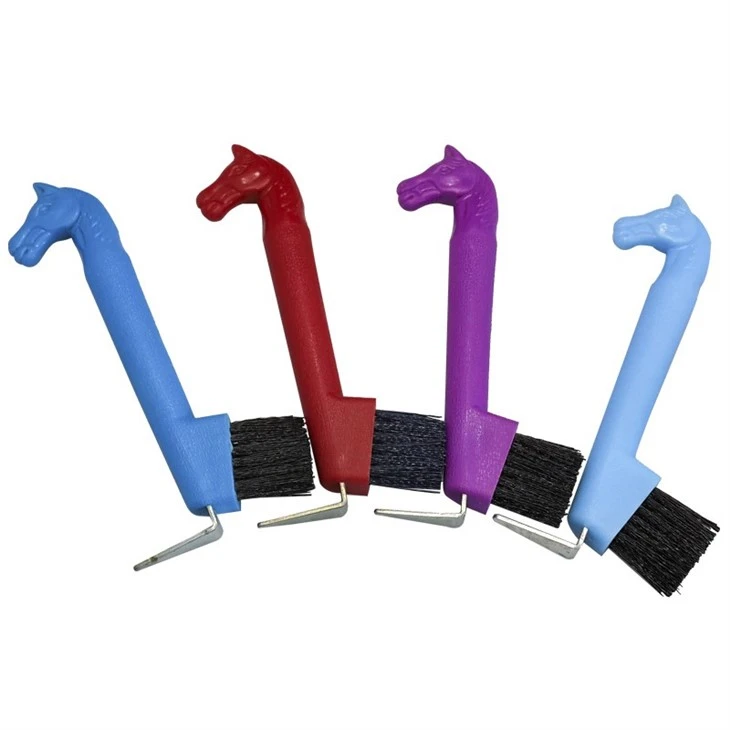
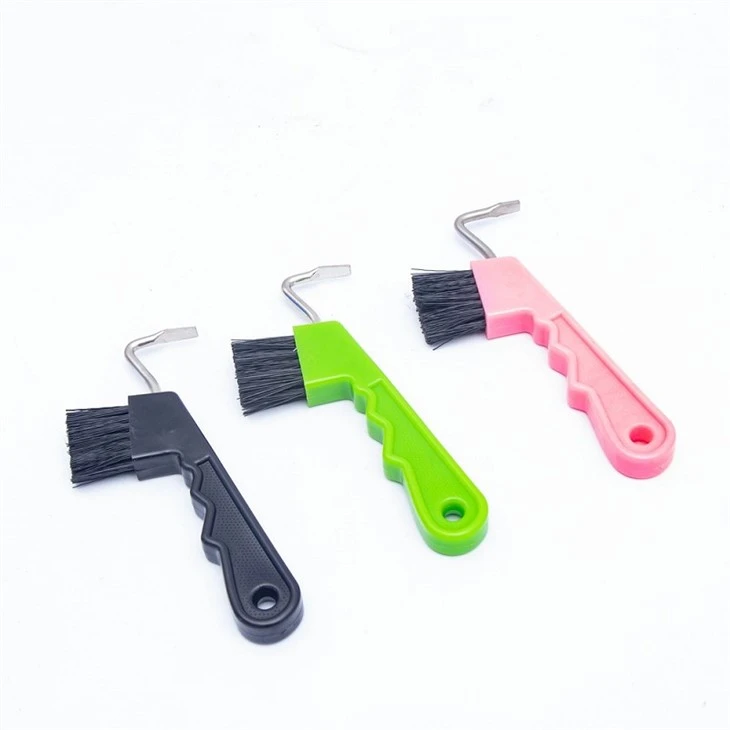
A hoof pick is a must-have in your horse grooming kit. Used to clear mud, rocks, snow and other debris from your horse's hooves, a hoof pick is a grooming tool you don't want to be without! Select a hoof pick or two, with or without a brush and keep some of these handy grooming tools nearby so you can pick your horse's hooves every day to aid in sound hoof health.
Benefits of Hoof Pick
Cleaning debris: The primary purpose of a hoof pick is to clean out debris, dirt, rocks, mud, manure, and other foreign objects from a horse's hooves. This is important for maintaining the horse's hoof health, comfort, and soundness. Accumulated debris can lead to discomfort, injury, or hoof problems if not removed.
Preventing Infections: Regular use of a hoof pick helps prevent conditions such as thrush and abscesses, which can occur when debris and moisture get trapped in the hooves. Removing this debris allows air to circulate and helps keep the hooves dry and healthy.
Inspecting hooves: Using a hoof pick allows horse owners, farriers, or veterinarians to inspect the hooves for signs of injury, disease, or lameness. It's an opportunity to identify and address any issues early, ensuring the horse's overall health and well-being.
Maintaining balance: The removal of debris can help maintain the natural balance of the hooves, which is crucial for the horse's gait and overall soundness. Detecting and addressing imbalances early can prevent lameness and other issues.
Routine grooming: Hoof picking is a fundamental part of routine grooming and horse care. It helps keep the horse clean and comfortable and can provide an opportunity to bond with the horse.
Hoof picks come in various shapes and sizes, with different handle designs. Some hoof picks have additional features, such as brushes or scrapers, to assist in cleaning. When using a hoof pick, it's essential to be gentle and patient, as the hooves are sensitive areas, and forcing or jabbing the pick can cause discomfort or injury to the horse.
Regular hoof picking is a crucial part of horse care and should be done at least once a day, more often if the horse is in a particularly muddy or rocky environment. It's an essential practice for maintaining the horse's hoof health and overall well-being.


Why Choose us
Quality services
Our team is committed to delivering high-quality services to our clients. We use the latest technologies and tools to ensure that our services exceed your expectations.
01
Quality
We offer high quality services and products that are relatable and resonate with your business needs.
02
Experience and expertise
Our company has been in business for many years and has amassed significant expertise and experience to provide quality services to our clients.
03
Competitive pricing
We offer competitive pricing for our services without compromising on quality.
04
Certifications and quality standards
Choose a factory that adheres to industry standards and certifications to ensure product safety and quality.
05
How to Pick a Horse Hoof
Readying your horse for picking
Calm the horse. Before you can start, you need to make sure your horse is calm. You should also make sure he does not want to wander off. You need to start in a calm area, because it is not possible to get your horse to stand on 3 legs if there is a lot of excitement around him.
You should tie your horse up. Make sure the rope that is holding them isn't too tight. This is so that, if the horse panics, he won't hurt his neck by jarring it against the bridle.
Make sure that the rope isn't too short, which could cause discomfort or panic. Also make sure the rope isn't tied too long, as the grazing instinct might take over and throw off the horse's balance if he lowers his head.
Start on one side
When you approach the horse, introduce yourself, and let the horse know you have good intentions. Give him gentle strokes on his neck and shoulder and speak to him softly. Stand near the shoulder of one side and turn your body to face his tail. For a horse that may kick, make sure that your body is positioned comfortably and safely.
● When you plant yourself next to your horse, have your outside leg slightly in front of the other for better balance and efficient maneuvering.
● Get into a routine with the horse so that he recognized what you're about to do. This will make it easier on you because he will be more likely to cooperate.
● It is a good idea to start with a front leg so you can gauge the horse's mood whilst being further away from the more dangerous back end.
Warn the horse
When you are firmly standing beside him, run your hand down your horse's leg, then tap at the back of his leg. This should warn the horse what you are about to do, which will give him time to square himself up. You want to make sure your horse does this, because if the other three legs are positioned too awkwardly, you will not be able to pick his hoof.
He won't pick up a leg if he feels unbalanced, so give him a chance to sort himself out.
Lift his leg
Once he is settled, give your horse time to lift his foot. You can squeeze the leg above the fetlock, which is the hinge joint above the hoof, if the horse doesn't automatically pick up the leg at the first command.[5] Have patience and be gentle, as this may take some convincing if the horse is not responding.
● If he still won't pick up his leg, gently lean against his shoulder. This sometimes helps to push his balance to his other side. Be careful to do it slowly so he can shift his weight.
● If all other attempts to get him to lift his leg have failed, gently squeeze his chestnut, which is the hard, oval growth above the knee on the inside of the leg. Be gentle and wait a second for the leg to lift. You should release it as soon as you get a response.
● If nothing else works, talk to him and make clicking noises with your mouth to make sure he is paying attention. If a normally obedient horse will not raise a leg, check for lameness.
Support the hoof
Once you get him to raise his hoof, hold the hoof in one hand. If he tries to pull away or put his foot down, hold the toe of the hoof and lift it towards his elbow. Support the hoof pick with the hand closest to the horse's body, leaving the hand furthest from the horse to wield the hoof pick. This allows you the best position to put your body against the horse, and feel what movements the horse is making.
● This also helps the horse to have confidence, because he knows exactly where you are and feels more secure.
● Some horses are much happier if you do not hold the pastern, which is the area below the fetlock and above the hoof.
Relax your pull
Once you finally get the horse's hoof supported in your hand and your horse relaxes, you can release the strength of your hold on the leg. You don't have to pull it so hard once he relaxes into the position. As soon as he does, you will only need minimal effort because the hold takes very little strength.
● If you relax, he is less likely to stamp his hoof down.
● Once the horse standing calmly on 3 legs, you can actually start picking the hoof.
● Do not pull the horses leg out toward you. You want to keep it in its natural place. If you pull it in an unnatural way, you will cause the horse serious pain.
Picking Your Horse's Hoof
Remove material from the frog. Once you have the horse hoof in your hand, you can start the picking process. Begin by removing any material from the frog, which V or triangular wedge shape that protrudes from the horse's heel towards his head, with your fingers or a brush rather than the pick. The frog is a sensitive part of the hoof that has a blood supply and nerve endings. It should be treated like any other sensitive part of the horse and handled with care.
● The frog sometimes shreds. If it looks tatty and ragged, gently tug it with your fingers. If it doesn't come away, it is probably pieces of the frog and you should leave it to come away by itself.
● If necessary, call a qualified farrier or hoof trimmer to trim it for you. If the frog is flaky, never be tempted to cut it back yourself. You can quickly go too deep and cut into living tissue, which could then cause your horse to go lame.


Clean the hoof
When cleaning, use the point of the hoof pick to gently loosen any stones and pry them free. Never dig the point into the sole or hoof. You should only use the point to gain leverage on stones. Use the edge of the hoof pick to loosen dirt, mud, and debris. Work away with steady strokes until you can see the horn that forms the horse's hoof.
It is best to work from heel to toe, to prevent accidentally damaging the heel area or stabbing yourself with the hoof pick.
Always work the hoof pick away from the frog. This means that you should start close to the frog and move the hoof pick away from it. This prevents accidentally piercing the frog with the pick.
Never apply pressure down towards the hoof, always use a wiping or swiping type motion, parallel to the hoof so as not to risk penetrating it.
Examine the horn
While you are picking the heel, you should look at the state of the horn, which is the layer of tough skin that surrounds inside of hoof wall. The horn of the hoof should look dry and be free from cracks or moist discharges.
If you see cracks, fissures, or a discharge, either in the form of pus or white, foul smelling discharge, contact your veterinarian immediately.
Pay particular attention to sensitive areas
These areas are along the cleft of the frog and around the white line area. These areas may get small stones stuck in them, which can be irritating and cause serious damage if left unchecked. Also check for thrush, characterized by a flaky white powder on the horse's hoof or frog. It will flake when scratched with the hoof pick. It's a common and potentially fatal hoof disease caused by wet or muddy conditions in a pasture or stall.
Much like the horn, you need to check to make sure the frog looks dry and there is no discharge or smelly material exuding from it. Place your palm over the frog to ensure it is not hot. A warm, tender frog is a sign of inner infection which needs prompt veterinary attention.
Check hoof health
Once you have gotten all the debris out of the hoof and you have checked the horn and the frog, you need to make sure that the hoof is in good shape. Check the sole of the hoof, which should be hard and concave. You also need to ensure that the hoof is balanced and not in need of trimming. The horse should be able to stand squarely with all hooves in contact with the ground.
Check for bruises and cracks within the hoof. If the horse is reluctant to put one hoof down, this could be a sign of pain or discomfort. If you notice this, pay particular attention to that leg when you check the hoof.
Examine the clenches. If your horse has shoes on, make sure the clenches, which are the nails that hold the shoe on, haven't risen. You will most likely know if they have risen when the clenches slice your hand. Try to shake the shoe to make sure that the shoe is not loose. Put the hoof down gently.
● If the shoe is loose, book a qualified farrier to replace it as quickly as possible. Put a hoof boot or bandage over a loose shoe to keep it in place until the farrier can come.
● Some horses do best with shoes, and some do best barefoot. Find a qualified farrier to discuss which is best for your horse.
Apply salve or conditioner if necessary
If your horse's hoof is extremely dried out, feels overly rough, or is in need of conditioning, you can add some hoof conditioner. There are many different brands of hoof conditioner or salve, such as Equine Squire Drawing Salve or Hoof maker, that can help rejuvenate your horse's hoof.
● You can make your own conditioner for your horse's hoof with coconut oil. You can also add one part aloe vera and one part glycerin to two parts coconut oil for a more intense conditioner for your horse's hooves.
● If your horse has an infection or other bacteria infection in her hoof, you can also get ointments such as ichthammol to help relieve pain, reduce inflammation, and kill germs.
Attend the other three legs
Once you have completed the full examination of one leg, you need to repeat the same procedure for each leg. When picking the rear hooves, stand right against the side of the horse's rump with your back to the horse's head facing towards his tail. Never stand directly behind the horse. If he kicked out, you would be seriously injured.
● Take care not to surprise the horse. You should run your hand down his back, over the rump, and right the way down the hind leg to his fetlock. Ask the horse to lift the back leg in the same way you did the front. Because you are standing to the side of the horse, should he kick out, just let go of the hoof and you will not get hurt.
● You should try to check the legs in the same order each time.
Keep bedding clean and dry
Dirty, wet bedding provides the ideal environment for bacteria to build up within the feet. This can lead to conditions such as thrush. Thrush is a bacterial infection, often caused by Fusobacterium necrophorum, which occurs in the clefts of the frog. The bacterium that is commonly involved is anaerobic, meaning it does not like oxygen. It produces a black, foul smelling discharge within the affected cleft of the frog, often making the frog soft and sore. Treatment involves moving the horse on to clean dry bedding and paring back affected tissues. Topical solutions should be applied to the area, as recommended by your vet.
Pick out hooves at least once day
Picking out the hooves is important in many ways and provides a vital opportunity to closely inspect all of the hoof structures.
The frog should be regularly inspected for damage, cuts and conditions such as thrush. The sole should be examined for puncture wounds and stones wedged beside the frog. The wall needs to be inspected for excessive growth or wear and the white line should be checked to ensure it is free from trapped grit which may cause opportunity for an infection if left.
If your horse has been out in damp muddy conditions and then brought in to a stable, it is important to pick out the feet, not only to carry out the checks previously described but also to remove the wet mud trapped in the underside of the hoof. Should this mud be allowed to remain in place it will leave the sole and frog damp for an extended period of time, which will result in the horn structures becoming soft and not as resilient as they should be.
Furthermore, picking out your horses feet regularly allows oxygen to penetrate the underside of the hoof, reducing the risk of conditions such as thrush developing.
Check the condition of the shoes
If shoes are fitted, assess their wear after two to three weeks (depending on the workload). If they are worn significantly, the next re-shoeing appointment should occur sooner or the workload on abrasive surfaces should be reduced. This will help to avoid shoes becoming loose or moving on the foot before the farrier's regular visit.
Shoes should also be checked daily for any movement on the foot, as when horses move freely it is possible for them to catch their shoes. Typically, horses will often catch the front shoes with their hind shoes and either lose them completely or bend one heel up. This is a problem as it is possible for the nails in the shoe to be trodden back again which may puncture the sole.
If the shoe has moved dramatically and a punctured sole is suspected, professional advice should be sought immediately as any puncture wound can be problematic. Additionally, a deep puncture within the middle area of the hoof can be potentially fatal, if not dealt with correctly.
Check the horse's digital pulse
Feeling your horse's digital pulse is a very useful way of assessing conditions that may be occurring within the hooves.
This is only helpful if you know what the digital pulse feels like when all is well. Once you know what is normal for your horse you will be able to tell your veterinary surgeon or farrier when it is abnormal for your horse.
One of the best places to find the digital pulse is over the outside of the fetlock joint, slightly towards the back. Use your thumb and forefinger and apply gentle pressure. A horse's pulse is slow at rest and often the fingers are moved away too quickly so make sure you wait patiently to feel the pulse.
Use a registered farrier
Routinely, an appropriately qualified farrier needs to attend your horse to undertake trimming and if necessary, shoeing. In the United Kingdom, registered farriers are governed by The Farriers Registration Act and overseen by the Farriers Registration Council.To find a registered farrier in your area visit The Farriers Registration Council.
Understanding The Hoof Pick

Personal selection
For people who love horses, spending time at the stables is not a hobby but instead a lifestyle. As a member of the Equestrian Team, I understand the bond between horse and rider. In order to ride however, equestrians (people who ride horses) have to take care of their horse; this includes brushing the mane and tail, brushing the body and legs of the horse, and cleaning the hooves. One of the most interesting and important tools of the cleaning (also known as tacking) process is called the hoof pick.

History
This tool has not changed much in shape or in size for many years. While the exact date of the first hoof pick used is unclear, parts of hoof picks were found with horse-cleaning (or grooming) supplies in the late 1800s. The shape of the metal has not been changed too much, but the handle has had minor changes to help the user hold the tool more effectively.

Materials and function
This tool has a rubber handle and a metal stick with a curve at the end. The tip is not completely sharp, so it will not hurt the horse. The tool is meant to clean away dirt from the underside of the hoof of a horse.

The user
While the user of the tool is the horse rider, the one who benefits from the tool is the horse. Hoof picks are super important because they make sure that the horse’s feet are clean and clear of dirt. This allows the horse to feel safe and comfortable when being ridden in the arena.

Affordance
The form of the hoof pick helps the user understand how to clean the feet of the horse. The sharp hook of the tool is the clearly the part that is used to pick away the dirt of the hoof. Sometimes the tool includes a hard brush, which is used to brush away the dirt after it is picked away. The shape of the bright, rubber handle suggests how the tool should be held by the curve in the form.
Our Factory
Yangzhou Peiyu Tools Co.,Ltd was founded in 2014,We have advanced equipment, strong technical force, the production of the product type is complete, reasonable price, timely delivery, all of our products are exported to Europe and the United States, Russia, southeast Asia and other countries and regions.
we are specialized in supplying and developing brushes for horse and other animals.Our leading merchandise includes:Horse brush,Horse grooming kit,Hoof pick,Sweat scraper,Bucket,Stall fork and so on.
We always improve our work to meet customers' different requirements.

Our Certificate

Asked Questions
Q: How often should a hoof pick be used?
Q: Which direction should you use a hoof pick?
Q: Do horses like getting their hooves picked?
Q: What does a hoof pick do for a horse?
Q: What could happen if a hoof was not picked out daily?
Q: How do you get a stubborn horse to pick up his feet?
Q: Does hoof picking hurt the horse?
Q: Why don t wild horses need their hooves cut?
Q: Do horses feel their hooves getting cut?
Q: Why do horses drag their hooves?
Q: What is a hoof pick made of?
Q: How do you teach a horse to pick up hooves?
Q: Can a horse's frog come off?
Q: Can a horse's frog grow back?
Q: What is the soft frog on a horse?
Q: Do horses feel their hooves being cleaned?
Q: What happens if you don't clean your horses hooves?
Q: What part of a horse's hoof is sensitive?
Q: What does it mean when a horse stomps his front foot?
Q: Why does my horse kick when I pick up his feet?
We're professional hoof pick manufacturers and suppliers in China, specialized in providing high quality customized service. We warmly welcome you to wholesale high-grade hoof pick made in China here from our factory.
Hoof Pick With Brush, Hoof Pick, Horse Hoof Pick Brush