


Horse Grooming Bag
What is Horse Grooming Bag
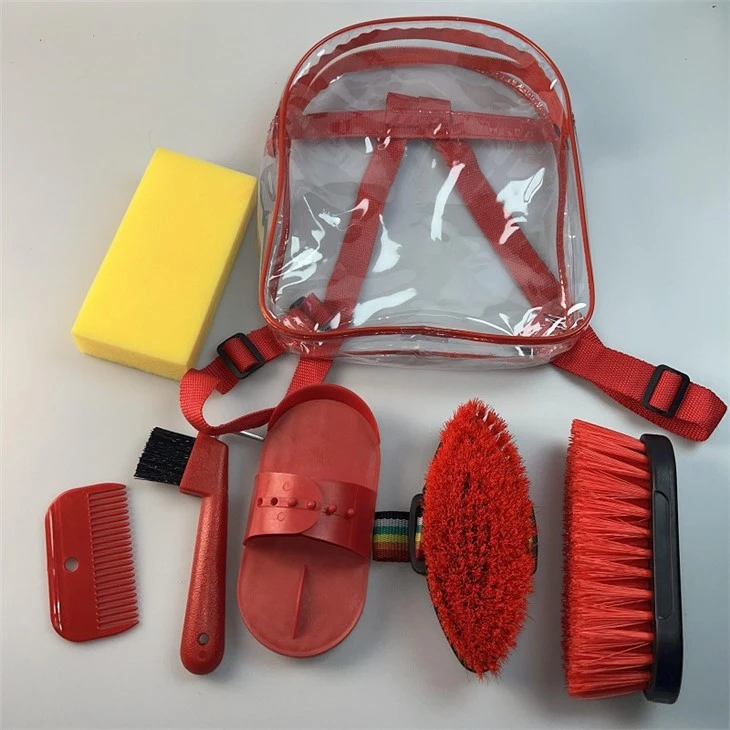
The horse grooming bag is designed to clean and care for the horse's skin, coat and hooves. To help prevent the spread of infection and disease, every horse should have their own brushes and the entire kit must be regularly cleaned.
Benefits of Horse Grooming Bag
Brushing
To keep your horse's coat healthy and glossy, there's nothing better than a daily brushing routine. This helps remove dirt, dust, and debris from the coat while promoting good blood circulation. It also evenly distributes natural oils that contribute to a shiny and healthy looking coat. Regular brushing is essential for preventing tangles and knots in both the mane and tail, making them much easier to manage.
Cleaning
Is your horse fond of rolling in dirt or mud? Horses are active animals, and it's common for sweat, dirt, and debris to accumulate on their coats. Establishing a daily cleaning routine to remove the grime is crucial in preventing skin problems. Pay extra attention to areas like the girth, belly, and between the legs when cleaning your horse.
Daily check
Taking the time to groom your horse daily not only helps maintain their appearance but also provides an opportunity to carefully examine their hair coat for any potential issues. By closely inspecting for cuts, scrapes, insect bites, external parasites, or skin problems, you can catch these concerns early on and seek proper treatment. This proactive approach prevents minor problems from escalating into more serious health issues.
Seasonal shedding
Horses experience a natural shedding process in which they lose their coats during certain times of the year, especially in the spring and fall. It's important to regularly groom horses during this time to remove loose hair and promote the growth of a healthy new coat.
Hoof care
Proper hoof care is crucial in the daily grooming routine for horses. In addition to keeping their coat clean, it is essential to regularly examine their hooves for any dirt, debris, or indications of infection or discomfort. Clean and healthy hooves contribute significantly to the overall welfare of the horse.


Why Choose us
Quality services
Our team is committed to delivering high-quality services to our clients. We use the latest technologies and tools to ensure that our services exceed your expectations.
01
Quality
We offer high quality services and products that are relatable and resonate with your business needs.
02
Experience and expertise
Our company has been in business for many years and has amassed significant expertise and experience to provide quality services to our clients.
03
Competitive pricing
We offer competitive pricing for our services without compromising on quality.
04
Certifications and quality standards
Choose a factory that adheres to industry standards and certifications to ensure product safety and quality.
05
Essential Tools for Every Horse Grooming Bag
Dandy brush
The dandy brush (also called ‘hard brush') is a long, oval-shaped brush with stiff bristles that effectively removes dirt, dust, and loose hair brought to the surface by the curry comb. The dandy brush is gentler on the horse's skin than a curry comb. Thus, it's suitable for more sensitive areas, like the face and legs.
The brush is particularly useful during shedding seasons as horses shed off their heavy winter coats during spring or during fall when they need to grow a thicker coat for the winter.
Like the curry comb, using a dandy brush stimulates blood circulation in the horse's skin and distribution of natural skin oils. The firm bristles exfoliate the horse's skin and contribute to a healthier and more vibrant coat. When using a dandy brush, remember the following tips to avoid irritating the horse's skin:
The dandy brush should be used with short, quick strokes in the direction of hair growth. Exerting excessive pressure should be avoided, particularly in sensitive areas.Start using the dandy brush on the horse's neck and slowly work your way to the belly, legs, and other sensitive areas.
Soft brush
The soft brush is very similar in design to the hard brush, but its synthetic (plastic) or soft natural (organic) fibre bristles are more pliable, denser, and finer, making it gentler for the horse's skin. The bristles make removing dirt and dust build-up inside a horse's coat easier.
Body brush
A body brush has shorter bristles. Some have a hand strap to make it easier to hold while brushing your horse. The bristles are usually made of natural hair (horse hair, pig bristle, or goat hair) and can be soft or firm. The closely packed bristles remove dust and debris from the coat while gently massaging the skin and stimulating the release of skin oils, giving your horse's coat a smooth and shiny appearance. The body brush is the final step in sweeping the dirt and debris off the horse's body. Use gentle, sweeping motions in the direction of hair growth.
Mane brush
The mane brush appears similar to hair brushes used by humans, but the real difference lies in their sturdiness. The mane brush is far more coarser and much stronger.
A mane brush commonly has metal or plastic bristles, and what you select will depend on what your horse's mane needs. Metal bristles are best for sorting out tough knots, while a plastic-bristled mane brush keeps the horse's mane soft and shiny. When your horse's mane is free from tangles, air can freely circulate through the strands while riding. This is essential for strong hair growth.
When using a mane brush, always begin brushing the mane from the ends, and working your way upward. If you encounter any tangle or knot, hold the hair above it to minimize pulling on the skin of the horse. Always use gentle, even strokes to avoid inflicting pain or discomfort to your horse.
Proper use, a mane brush makes it possible to remove stubborn knots from your horse's mane without causing pain or discomfort. Regular mane brushing may be needed to keep your horse's mane in good condition and prevent matting.
Mane and tail brush or comb
Mane and tail brushes are dual-purpose versatile tools that can be used on both the horse's mane and tail. These brushes are designed for different textures and lengths of hair. Generally, the bristles are of mixed lengths, some longer and more spaced out to make it easier to work through and detangle the thicker and longer tail hair. The brush untangles the knot from the inside out without pulling out any hair around it. This can reduce damage to the mane and tail hair. The bristles may also vary in stiffness -- the stronger bristles are great for tackling tail tangles, and softer bristles for the mane.
Mane and tail brushes come in various sizes, but they're generally larger and more elongated than the standard mane brush. This makes it easier to work through longer tail hair. A wide-toothed mane and tail brush work well for shorter manes or when trying to help tail hair grow.
The main thing to consider when choosing a mane and tail comb is the spacing between the teeth. It should be wide enough to prevent any hair from being caught, but not so wide that it's not effective at sorting out tangles.
Face brush
A horse's face is a sensitive area that needs a specially designed brush. A good face brush should have soft and gentle bristles that is appropriately sized for the horse's face. Smaller face brushes are more popular because they're easier to maneuver and control around the delicate features of the horse's face.
Some face brushes are designed to be suitable for the face and other sensitive areas of the horse's body, such as the ears and legs.
Finishing brush
A finishing brush is used at the end of your horse's grooming regimen. The very soft bristles remove small traces of dust that may have built up while grooming and leave your horse's coat clean and gleaming.
Rag or washcloth
A clean rag or washcloth is used to clean the horse's nostrils, ears, and the area around the eyes.
Sweat scraper
A rubber-edged sweat scraper is used to swipe off water from the horse's body following a bath. Make sure to follow the direction of hair growth from the horse's neck backwards.
Shedding blade
As winter turns to spring, shedding blades will come in handy to remove loose winter hair. These blades are generally made of metal, with short, dull teeth. Appropriate care must be exercised when using a shedding blade, as the metal teeth can split the horse's coat and may cause skin irritation.
Grooming apron or tote
Having a dedicated tote or apron with compartments for your grooming tools keeps everything organized and easily accessible.
Rubber gloves
Wearing gloves while grooming helps prevent transfer of oils from your hands to the horse's coat, and it can also provide a more polished finish.
Hoof pick
A hoof pick is essential for keeping your horse's hooves clean and healthy. It's used to remove dirt, stones, debris, or any foreign object from the hooves. The pick is typically made of metal with a handle that's made of wood, plastic, or rubber.
4 Key Grooming Horse Grooming Bag Tips

Always have the core tools
A successful grooming session happens when you have the right horse grooming bag on hand. There's a reason why you need different types of brushes. They have various bristles and bristle textures designed to meet different purposes.
If you don't have one of the essential brushes, it might be difficult to remove dirt and debris from the deeper areas if the bristles are too fine or delicate. Or, you increase the likelihood of scratching your horse if you use a tool that is too coarse.
To make your job easier, make sure you've got the right tools on hand before starting. That way, you'll be able to clean your horse without a hitch!

Don't opt for a cheap horse horse grooming bag
We get it. Buying an entire horse grooming kit with all the necessary supplies can be expensive. When you see cheaper alternatives, it can be really tempting to go for those instead. But buying cheaper products isn't always the best option.
Often, the quality is not ideal when a particular tool is more affordable. As a result, you'll wind up having to constantly replace your tools. This means you're likely to spend more than buying a single, more expensive item.
If the quality of the brushes is off, you might find that the bristles are either too stiff or too coarse. This is not good for your horse. The animal might feel uncomfortable during grooming, or he can find the session to be a little rough.
Bad brushes can also cause scratches and wounds that are not good for the equine. Remember that grooming is essential to keep the horse healthy and thriving. If you make the experience harsh or uncomfortable, your horse might dread the next grooming session.

Organize your horse grooming bag
Organizing your horse grooming bag is another big part of ensuring you have a successful grooming session with your horse.
The tool arrangement inside the kit mainly depends on how you proceed with your horse's grooming session. Perhaps you always use the curry comb first. Or, maybe you prefer washing the horse's coat with hair products first.
Regardless of what your style is, learn to arrange the tools in the best way possible, making the session quicker and more convenient. It's always best to prep what's inside a day before the grooming session to ensure all the tools you need are there.
Keep everything clean
After using the brushes and before placing them back in the kit, clean them. You need to check whether the bristles are free of debris, dirt, mud, or manure that can stick to the bag or toolbox where your other supplies are.
Not only does this save you time cleaning your brushes right before the grooming session, but it also helps with reducing possible cross-contamination, especially when you own multiple horses. Clean brushes also ensure they can effectively remove dirt and debris from your horse's coat.
Horse Grooming: Brushing A Muddy Horse
Horse grooming step 1: clean feet and legs
“If your horse's feet and legs are muddy, hose them and pick out their feet. “It's quicker and easier to wash muddy legs than try to brush the mud off, but don't wash too often as it weakens the skin and could increase the chances of mud fever. Always dry a horse's legs thoroughly when they're wet as this will help to prevent mud fever and other skin conditions. I like to apply talcum power to white legs because it helps to dry them, as well as making them whiter.”
Horse grooming step 2: tackle a dirty tail
“Give the bottom of your horse's tail a shampoo. “If you only wash the bottom of the tail, a cold-water rinse is just as good, otherwise you'll have to wait for the kettle. Your horse isn't going to feel the cold, only you are — although you could don rubber gloves to help.
“Having washing up liquid or white-enhancing shampoo in your horse grooming bag is great for cleaning grey tails and white legs. Add beeswax polish, baby oil or conditioning spray to the tail before combing through, then snip the ends for a neat finish.”
Horse grooming step 3: body beautiful
“If your horse isn't as muddy on their body, mane and head, a quick but thorough groom with a dandy brush will loosen the mud, then flick it away,” advises Jess. “If you've had to apply water to get rid of thicker mud, use a mesh or wicking rug to help them dry. Stable or grass stains can be removed with a dry shampoo, then remove any remaining dust with a body brush.
“If you haven't got enough time to bath really grubby areas, hot-cloth them using hot (but not too hot) water with a splash of Dettol or baby oil and a well wrung-out flannel. This probably isn't necessary to ride or hack at home, but if you're getting ready for a competition it really helps.”
Horse step 4: final touches
If you're preparing your horse for a competition, this last step of the process is for you:
“Once at the show, spray some coat shine over his body, avoiding where your saddle sits,” advises Jess. “A microfibre cloth can also add great shine in the absence of sprays. Give your tack a final polish, and then apply oil to your horse's hooves and baby oil over their muzzle, knees and hocks. Now your horse will look smart enough to stand out, and nobody ever needs to know you got them ready in 30 minutes.”
How To Choose the Right Horse Grooming Bag
Choosing a plastic pail is not a matter of chance. It's essential to consider your specific needs, the type of contents you plan to store, and the requirements specific to your sector. This will help you select the pail with lid that best meets your expectations. Here are a few points to consider:
Currycombs
Materials: Rubber or plastic
Shopping tip: Look for a comb that's firm enough to do the job but not so hard that it will injure your horse's skin.
A good rubber or plastic currycomb is essential to any grooming kit. Several different designs and sizes are available, but all will help loosen hair and dirt while massaging the skin and stimulating oil production.
When selecting a curry, the teeth are key. If they are too soft, you won't get the proper dirt-busting, skin-massaging action. But extremely hard teeth can cause discomfort for the horse or even break his skin, providing an entryway for infections such as rainrot.
“On most horses, I use the old-fashioned heavy, rubber currycomb with the concentric circles of teeth,” says Harris. “I like how they bend slightly in my hand and that the rubber is slightly ‘tacky,' which helps remove loose hairs. I've found that smooth plastic currycombs don't always do this as well.”
Hard (Dandy) brushes
Materials: Synthetic (plastic) or natural fibers (bassine, palmyra, rice root, or union fiber)
Shopping tip: Focus on the diameter of the brush bristles—that will tell you the size of dirt particles the brush will remove most effectively.
These brushes, which typically have oblong handles and stiff, large-diameter bristles, are the workhorses of a grooming kit. “Brushes only remove dirt particles that are close in size to that of the bristles,”explains Harris. “So hard brushes with large, coarse bristles are for removing dried dirt and heavy mud.”
When purchasing a hard brush, consider your climate and the type of dirt your horse usually collects. If you live in an area where caked-on mud is common, go for a firm brush with large bristles. If mud is less of a problem, you can opt for a “medium” hard brush. “You don't want a brush that's coarser than you need because some thin-skinned or sensitive horses can really object to a very hard brush,” says Harris.
Soft brushes
Materials: Synthetic (nylon or plastic) or organic (tampico, union fiber, pig bristle, or horsehair) fibers
Shopping tip: Hold the brush in your hand to get a sense of its weight and feel. Then imagine using it every day for the next few years.
Soft brushes have the same basic shape and design as hard brushes, but—as the name implies—the bristles are much more flexible. Most are composed of soft synthetics or softer organic fibers that are comparatively narrow in diameter. “Because the fibers are smaller and set closer together than a hard brush, soft brushes remove the small dirt particles and dust,” says Harris, who adds that the range of “soft” in soft brushes is wide. “This is where you consider the horse's preference. Go as soft as he needs. You can even find some ‘mixed' brushes, such as those made of union fiber, that have soft and coarser fibers mixed together in a salt-and-pepper type of pattern.”
The long bristles of a soft brush can get clogged with dust quickly. “Every few strokes, you need to drag them across a metal currycomb,” says Harris. “That frees the dust from the brush into the air.”
Body brushes
Materials: Horsehair, goat hair, pig bristle, or plastic
Shopping tip: Bristles on body brushes range from medium to very soft. It may make sense to have more than one body brush: an extremely soft one for the head and face, with a firmer-bristled brush for the rest of the body.
Although body brushes have soft bristles, they are easy to distinguish from soft brushes. For starters, their bristles are much shorter and tightly packed than those on a soft brush. And the handles of body brushes are typically oval with a strap across the back.
These features are key to how a body brush works to clean your horse: “The shorter, close-packed bristles reach down to the base of the hair coat and the skin,” says Harris. “They will pull out dust, but their biggest benefit is massaging the skin to release oils that they then spread across the hair shaft. This is what makes a well-groomed horse shine.”
Our Factory
Yangzhou Peiyu Tools Co.,Ltd was founded in 2014,We have advanced equipment, strong technical force, the production of the product type is complete, reasonable price, timely delivery, all of our products are exported to Europe and the United States, Russia, southeast Asia and other countries and regions.
we are specialized in supplying and developing brushes for horse and other animals.Our leading merchandise includes:Horse brush,Horse grooming kit,Hoof pick,Sweat scraper,Bucket,Stall fork and so on.
We always improve our work to meet customers' different requirements.

Our Certificate

Asked Questions
Q: How do I organize my horse grooming supplies?
Q: How often do you need to clean a horse grooming brush?
Q: What tool is used first when grooming a horse?
Q: How should grooming equipment be stored?
Q: What is a grooming kit used for?
Q: What do groomers use for shedding?
Q: How do I get my horse to stand still while grooming?
Q: How do you disinfect horse grooming tools?
Q: How long should it take to groom a horse?
Q: Do horses need grooming every day?
Q: How do I get my horse to enjoy grooming?
Q: What's a horse groomer called?
Q: What are horse groomers called?
Q: How do you maintain grooming blades?
Q: What is a body brush used for horses?
Q: What are different horse brushes for?
Q: What are the three types of grooming?
Q: What is deshed grooming?
Q: When a horse grooms you back?
Q: Why do horses get nippy?
We're professional horse grooming bag manufacturers and suppliers in China, specialized in providing high quality customized service. We warmly welcome you to wholesale high-grade horse grooming bag made in China here from our factory.
Horse Grooming Bag, Grooming Kit Bag Horse, 6 in 1 Horse Grooming Brush